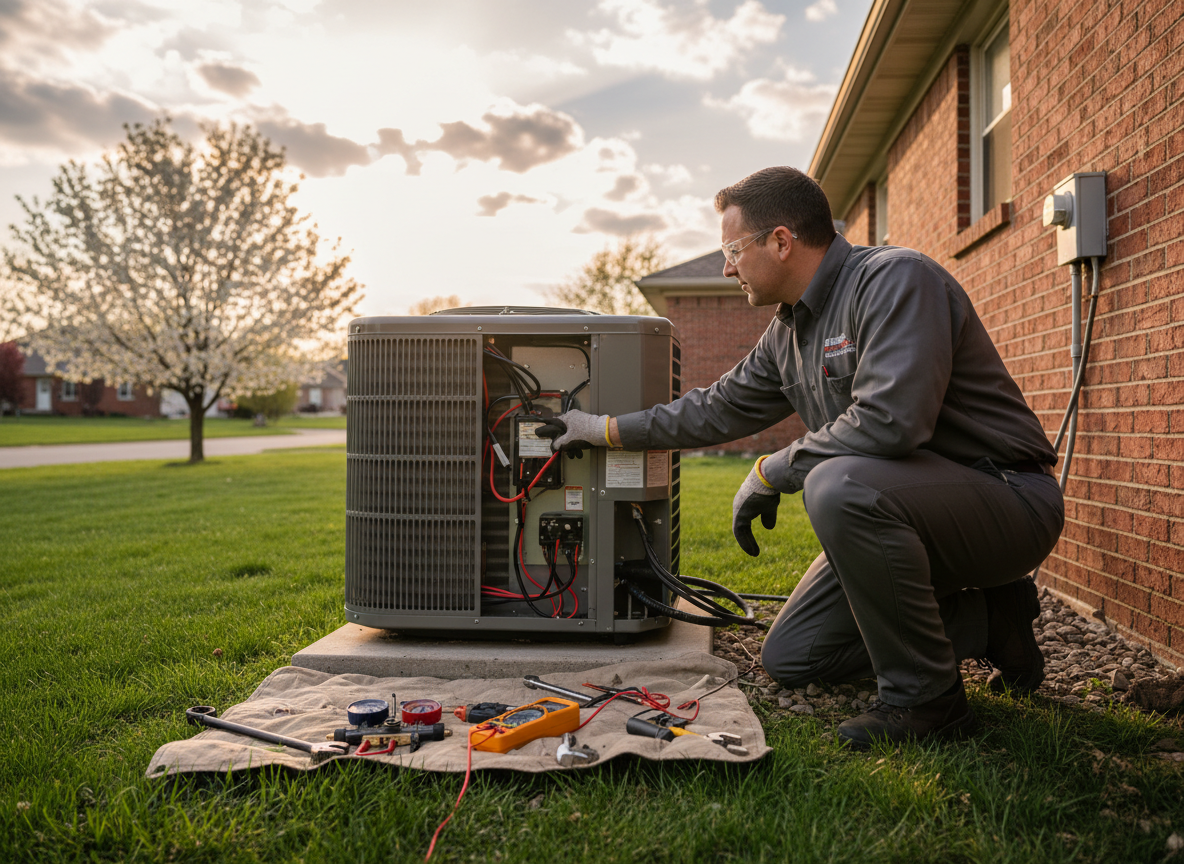
Dayton’s humid continental climate pushes heat pumps through long cooling seasons and sub-zero winter nights, especially in older housing stock found in the Oregon District and South Park. These systems often run 24/7 during July humidity spikes or January cold snaps, wearing reversing valves, defrost boards, and capacitors faster than in milder regions. Technicians at Perfect Temp, based at 2800 E 3rd St, see frequent low-airflow issues from dirty coils in homes built before central-air retrofits became common.
Montgomery County soil and terrain can affect outdoor unit placement; many units sit on sloped lots near the Great Miami River that collect standing water during heavy spring rains. This leads to corroded electrical connections and failed defrost sensors that homeowners notice only when the system stops heating on a 15-degree morning. Proper diagnosis includes checking refrigerant charge against manufacturer specs rather than guesswork, because over- or under-charging shortens compressor life in our temperature swings.
Repair calls in University Row and Downtown Dayton frequently involve 10- to 15-year-old units still tied to original ductwork that was never resized for heat-pump airflow. Technicians check static pressure and clean or replace filters before condemning the equipment. 24/7 availability means crews can address no-heat emergencies after dark when temperatures drop quickly across Beavercreek and Kettering.
Technician insight
In Dayton, the thing that catches most people out with Heat Pump Repair is skipping the defrost sensor check after a harsh winter. Older homes in South Park and the Oregon District often have units sitting in low spots that collect meltwater; the sensor fails first, then the compressor works harder every cold night until it trips out.
No Heat on a January Morning in Kettering
A 12-year-old heat pump serving a ranch home in Kettering stopped producing heat after several nights below 10 degrees. We found a failed defrost board and corroded outdoor fan motor caused by repeated freeze-thaw cycles. We replaced both components, restored proper airflow, and verified the system completed defrost cycles without fault. The homeowner regained reliable heat before the next cold front moved through Montgomery County.
How it works
- 1
Initial Assessment
Arrive on site, confirm symptoms, and review system age and recent service history.
- 2
Diagnostic Testing
Check electrical components, refrigerant pressures, airflow, and defrost operation under load.
- 3
Identify Root Cause
Isolate whether the issue is electrical, mechanical, or airflow-related before quoting repair.
- 4
Perform Repair
Replace or rebuild the faulty part, then retest the full cycle in both heating and cooling modes.
- 5
Final Verification
Confirm proper operation, review findings with the homeowner, and note any follow-up items.
Pricing
Most heat pump repairs fall into a mid-range cost that depends on the part required and time on site; we provide an upfront quote after diagnosis.