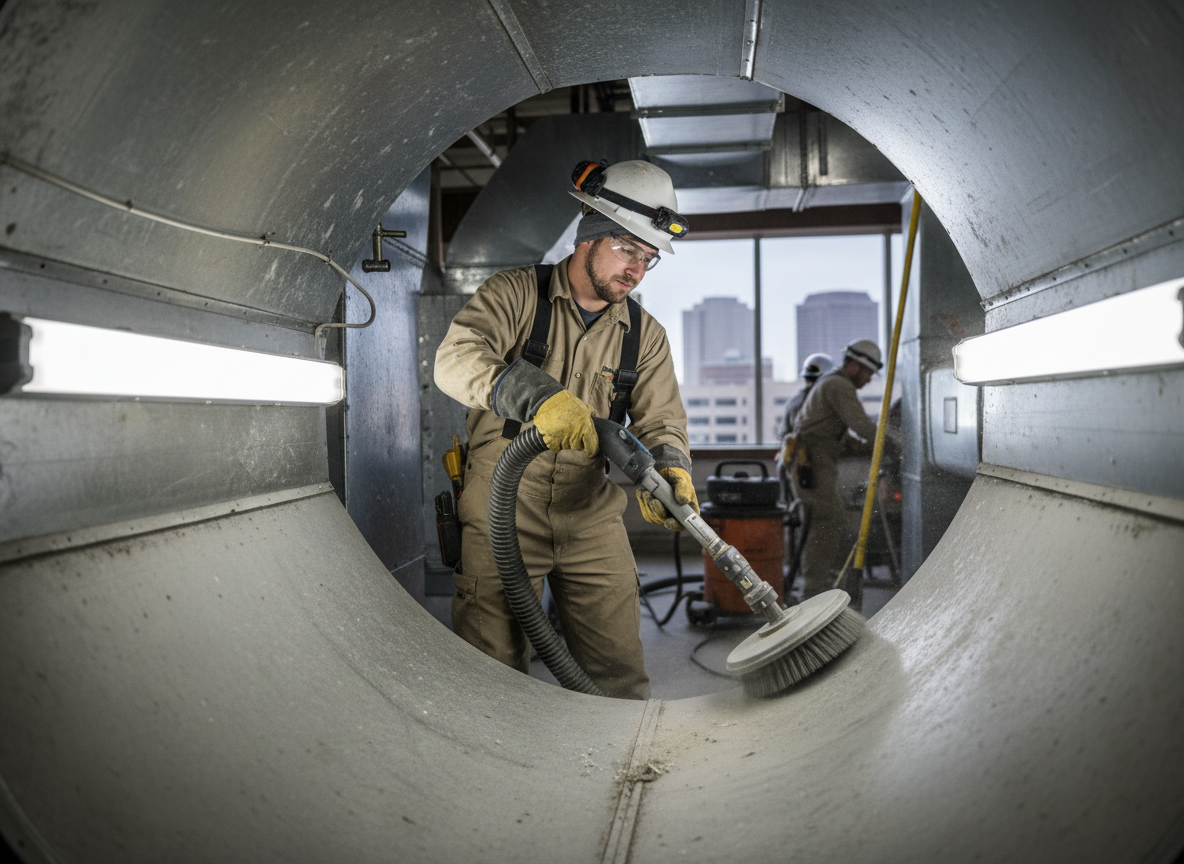
Dayton homes in neighborhoods such as the Oregon District and South Park often feature older ductwork from the early to mid-20th century that struggles with the region's humid continental climate. Hot summers drive high humidity levels that promote mold in poorly sealed returns, while cold winters pull dry air through gaps around registers in University Row properties. Proper maintenance involves inspecting for corrosion on galvanized ducts common in Montgomery County basements and sealing joints with mastic rather than tape that fails in freeze-thaw cycles. Technicians also check for backdrafting risks near the National Museum of the US Air Force flight paths where pressure changes can affect exhaust fans.
In Kettering and Beavercreek subdivisions, many systems tie into original gravity furnaces that require careful balancing to maintain fresh air exchange without overloading newer heat pumps. Edge cases include blocked fresh air intakes clogged by pollen during peak summer months or lint buildup in laundry room vents that restricts airflow in two-story homes common downtown. Maintenance includes measuring static pressure across the blower and verifying that HRV filters are rated for the area's high particulate load from nearby industrial zones. Homeowners should avoid closing off too many supply runs in winter, as this creates negative pressure that pulls radon from Montgomery County soils into living spaces.
Regular service prevents the efficiency losses that occur when filters load up faster in humid conditions, forcing the blower to work harder against Dayton's variable winds. Crews clean evaporator coils and check condensate drains that can freeze during sudden cold snaps after mild periods. They also test damper operation in multi-zone setups found in Carillon Historical Park area homes where additions have altered original airflow paths. Documentation of CFM readings helps track changes over seasons and supports any needed adjustments before peak heating demand hits.
Technician insight
In Dayton, the thing that catches most people out with Ventilation System Maintenance is how older plaster-and-lath construction in the Oregon District traps moisture behind walls during our cold winters once the fresh air intake gets restricted by pollen or debris.
Restricted Airflow in South Park Home
A South Park homeowner noticed uneven temperatures and musty smells in winter. Inspection revealed collapsed flex duct in the crawlspace from years of humidity cycles. Crew replaced the section, resealed connections, and restored proper airflow without needing full system replacement.
How it works
- 1
Initial System Assessment
Technician arrives at the Dayton address and reviews the full ventilation layout, noting duct materials and any visible moisture stains from the humid summers.
- 2
Component Cleaning and Inspection
Filters, coils, and registers are cleaned while checking for gaps in older duct runs typical of South Park and Downtown Dayton homes.
- 3
Airflow Testing and Sealing
Static pressure and CFM measurements are taken, followed by sealing joints with appropriate materials suited to cold winter conditions.
- 4
Final Verification and Recommendations
System is run through heating and cooling cycles to confirm balanced ventilation before providing the homeowner with a written summary.
Pricing
Pricing depends on home size, number of zones, and condition of existing ductwork.