2026-11-27 ·
Reducing Humidity Problems In Dayton Basements With HVAC Adjustments
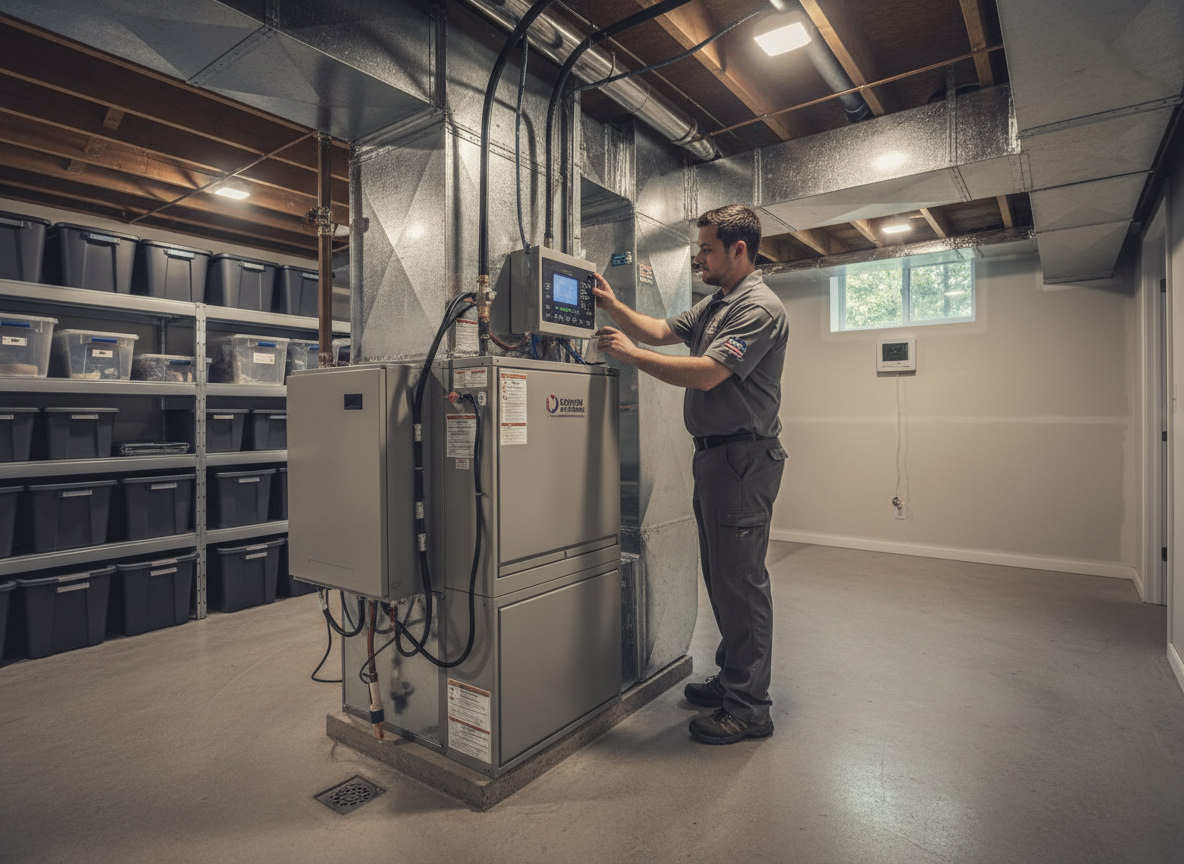
In Dayton basements, running a whole-home ventilation system paired with a dehumidification cycle on the existing HVAC unit typically holds relative humidity between 40 and 50 percent through the humid months. Older housing stock in South Park and the Oregon District often lacks modern vapor barriers, so moisture from the soil migrates upward once summer temperatures climb and winter heating dries the air upstairs. Adjusting blower speeds downward during cooling and adding a separate dehumidistat tied to the air handler prevents short-cycling while pulling excess moisture. These steps work within the humid continental pattern of hot, muggy summers followed by freezing winters that force furnaces to run long hours.
Dayton Climate and Basement Moisture Patterns
Montgomery County sits in a humid continental zone where July dew points frequently exceed 65 degrees and January lows drop below 20. That swing pushes warm, moist air into basements through unsealed walls and floor cracks in homes built before 1960, common in Downtown Dayton and University Row. When outdoor humidity stays above 70 percent for weeks, standard air-conditioning runtimes alone rarely drop indoor levels below 55 percent. Cold winters compound the issue by creating stack effect pressure that pulls damp air from crawl spaces upward. Homeowners in Kettering and Beavercreek report the same pattern in ranch-style houses with partial basements. Matching HVAC runtime to actual moisture load rather than temperature alone cuts peak humidity readings by roughly 10 points without extra equipment.
Ventilation and Airflow Adjustments That Work
Lowering the blower speed on the air handler by 10 to 15 percent during cooling extends coil contact time and wrings more moisture from the air before it reaches living spaces. Pairing that change with a fresh-air intake damper set to 15 percent open brings drier nighttime air indoors once temperatures fall after midnight. In homes along the Oregon District where basements sit below street grade, sealing supply leaks in the ductwork prevents conditioned air from escaping and drawing humid replacement air through foundation cracks. Running the fan on continuous low speed between cycles keeps air moving across the evaporator coil even when the compressor is off. These airflow settings integrate directly with existing systems and require only a service call to reprogram the control board.
Adding Targeted Dehumidification Through Existing HVAC
Installing a whole-home dehumidifier downstream of the evaporator coil and wiring it to a dedicated humidistat maintains 45 percent relative humidity even when outdoor dew points stay elevated. The unit drains into the same condensate line already serving the air conditioner, avoiding new plumbing runs in tight South Park basements. In winter, switching the same dehumidifier to ventilation mode exchanges stale basement air with drier outdoor air on days when temperatures sit above 35 degrees. This approach avoids the short-cycling that occurs when the heat pump or furnace tries to handle latent loads alone. HVAC Maintenance visits twice a year confirm the drain lines stay clear and the humidistat calibration stays accurate through seasonal shifts.
Maintenance Steps That Sustain Lower Humidity
Replacing the air filter every 60 days prevents restricted airflow that forces the system to run longer and re-evaporate moisture back into the house. Cleaning the evaporator coil annually removes the biofilm that reduces dehumidification efficiency in high-humidity periods. Checking the condensate pump and drain line slope ensures water leaves the system instead of backing up and raising indoor moisture. Ventilation System Maintenance includes verifying damper positions and intake filters so fresh-air exchange does not introduce excess humidity. Smart Thermostat Installation lets homeowners program separate humidity setpoints for day and night, overriding temperature-only logic that ignores latent loads. These tasks keep adjustments effective year after year in Montgomery County homes.
When to Review Related System Performance
Homes with heat pumps in Kettering often see humidity rise during shoulder seasons when the unit runs in mild weather. Checking the article What Dayton Homeowners Should Know About Heat Pump Performance In Freezing Weather shows how auxiliary heat strips can dry air too quickly and create new moisture imbalances. Older Dayton homes with uneven heating patterns may also benefit from reviewing Common Causes Of Uneven Heating In Older Dayton Homes before finalizing basement airflow changes. Coordinating these reviews prevents one adjustment from creating problems in another part of the system.